Tired of Battling Inconsistent Indoor Temperatures?
Cedar Lake experiences drastic swings from humid summers to freezing winters, making manual thermostat adjustments a constant and frustrating chore for homeowners. Managing your home's climate shouldn't feel like a second job, yet outdated systems often leave specific rooms too hot while others remain uncomfortably cold. Contact us today to schedule your smart control upgrade or inquire about our flexible financing options.
Whether it is the peak of summer heat or the dead of winter cold, your home’s climate should stay comfortable and consistent. Discover how our smart HVAC controls can keep your living space perfectly balanced, all year round:
- Achieve optimal indoor comfort with advanced temperature regulation that adapts to your habits.
- Reduce energy costs with efficient, season-adjusting controls that minimize waste.
- Quick installation and reliable support ensure minimal disruption to your daily routine.
Backed by industry-leading warranties and available with flexible financing options, Mr.Freeze Heating & Cooling ensures your transition to automated comfort is seamless and secure.
Modernizing Your Climate Management System
Upgrading to smart HVAC controls is more than just swapping a dial on the wall for a touchscreen; it is a fundamental shift in how your home consumes energy and maintains comfort. Unlike traditional programmable thermostats, which operate on rigid schedules that you must manually input and adjust, smart controls utilize learning algorithms, sensors, and connectivity to optimize your HVAC system's performance in real-time.
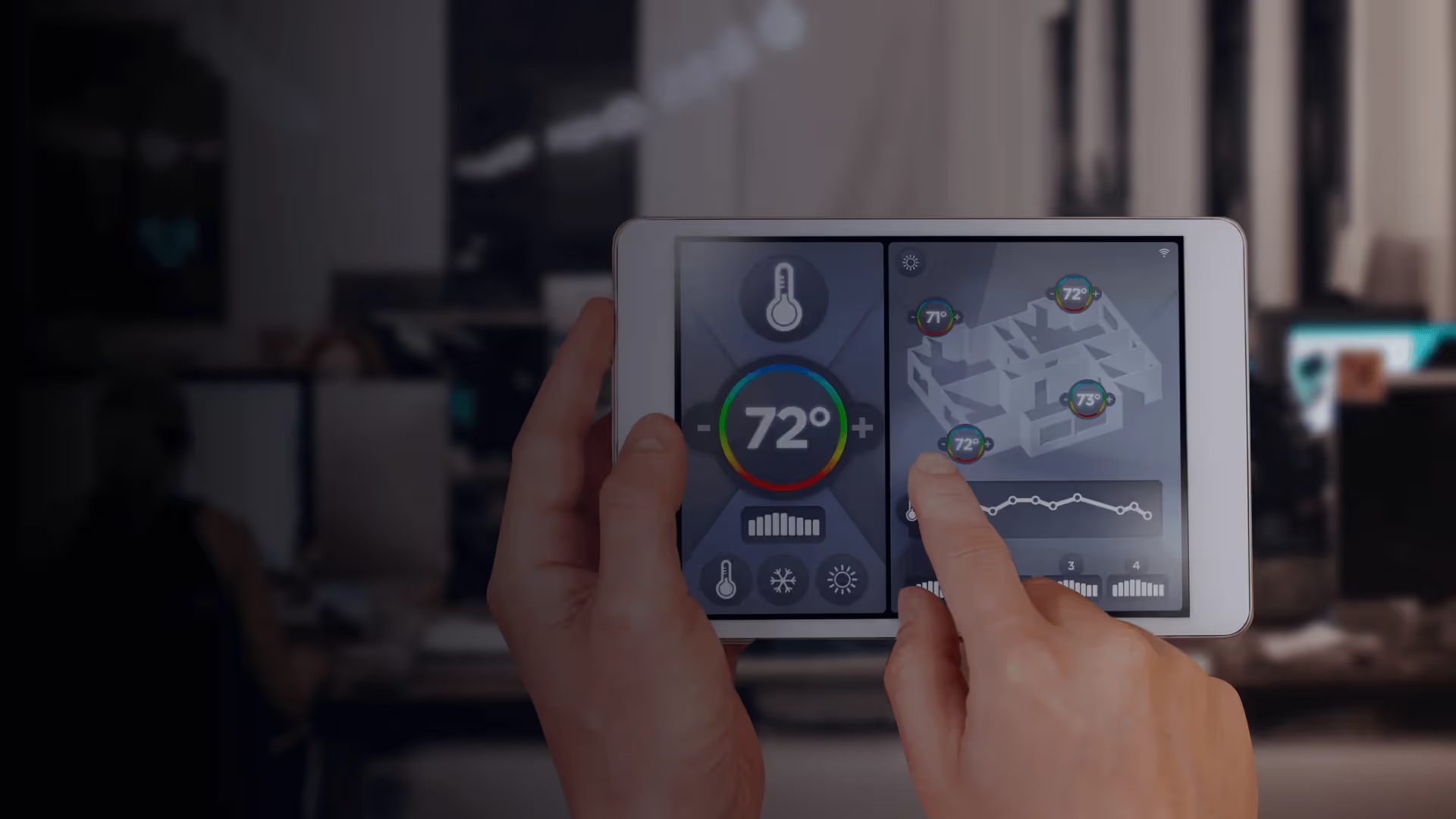
Homeowners in Cedar Lake often face the challenge of keeping a multi-story home evenly conditioned. A standard system reads the temperature at a single point—usually a hallway—and runs the furnace or air conditioner until that specific spot reaches the set point. This often leaves bedrooms, basements, or sunrooms at vastly different temperatures. Smart controls resolve this through remote room sensors and zoning capabilities. These systems can prioritize occupied rooms, ensuring the areas you are actually using are comfortable, rather than heating an empty hallway.
When you invest in a smart control system today, the package typically includes the primary control unit, integration with your existing Wi-Fi network, and the setup of a mobile application for remote management. High-end systems may also include humidity sensors, which are vital for managing the muggy Indiana summers, and "communicating" capabilities that allow the thermostat to vary the speed of your blower motor for quieter, more efficient operation.
The scope of this service involves a comprehensive evaluation of your current HVAC equipment. Not every furnace or air conditioner is immediately compatible with every smart thermostat. Older, single-stage equipment may require different wiring adapters compared to modern, variable-speed systems. The goal is to create a fully integrated ecosystem where your heating, cooling, and ventilation work in tandem to reduce runtime while improving air quality.
The Installation Protocol: Moving Beyond Basic Thermostats
Installing a smart HVAC control system is a technical process that involves high-voltage and low-voltage electrical work, network configuration, and system calibration. While many assume this is a simple plug-and-play scenario, the reality of connecting modern technology to existing HVAC infrastructure requires professional precision:
- Site Assessment and Compatibility Check: The process begins with an inspection of your current furnace and air conditioning unit control boards. Technicians verify the existence of a "C-wire" (common wire), which provides the continuous power required for smart thermostats with Wi-Fi radios and color touchscreens. In older homes, this wire is often missing, requiring the technician to run new thermostat wire or install an add-a-wire adapter kit to ensure the new unit functions without stealing power from the HVAC system, which can cause short-cycling.
- System De-installation and Wiring: Technicians safely disconnect the old unit, labeling wires to ensure the correct terminal connections. The mounting plate is leveled and secured to the wall, often requiring minor drywall adjustments if the new unit has a different footprint. The wiring is then connected to the smart backplate, ensuring solid contact for the R, W, Y, G, and C terminals. This step is critical; incorrect wiring can blow fuses on the furnace control board or permanently damage the smart thermostat.
- Configuration and Network Setup: Once hardware is installed, the system is powered up and configured. This involves entering the specific equipment type (e.g., heat pump with auxiliary heat, gas furnace, boiler) into the installer settings. Incorrect settings here can lead to inefficient operation, such as running emergency heat strips unnecessarily. The device is then connected to the home’s Wi-Fi network, and the companion app is paired with the homeowner’s smartphone.
- Calibration and Testing: Finally, a full system test is run. The technician forces the system into heating, cooling, and fan-only modes to verify that the equipment responds immediately to commands. Temperature sensors are calibrated to match the actual room temperature, and any remote sensors are paired and placed in strategic locations to average out hot or cold spots.
Deciding Between Existing System Repair and Smart Upgrades
Homeowners often struggle to determine whether a comfort issue stems from a broken HVAC unit or simply an outdated control system. Understanding when to repair the existing setup versus when to upgrade to smart controls is essential for long-term satisfaction and budget management.
If your current system runs reliably but you still experience temperature swings, high energy bills, or humidity issues, the problem is likely the control interface, not the mechanical equipment. In this scenario, upgrading to a smart control system is a cost-effective solution. For example, if you wake up freezing because the temperature dropped overnight and the old thermostat didn't adjust, or if you return to a sweltering home after work, a smart upgrade resolves these issues without the need to replace the furnace or AC unit.
However, if the system is making strange noises, emitting odors, or failing to turn on at all regardless of the thermostat setting, a mechanical repair is necessary. A smart thermostat cannot fix a broken compressor, a cracked heat exchanger, or a refrigerant leak.
There is also a compatibility threshold to consider. If your HVAC system is over 20 years old and utilizes "millivolt" wiring (often found in very old floor furnaces or wall heaters), it may not be compatible with modern smart controls without significant electrical overhauls. In such cases, it often makes more financial sense to wait until the entire HVAC unit is replaced before investing in smart controls.
Conversely, if you are installing a new high-efficiency, variable-speed furnace or air conditioner, keeping an old manual thermostat is a mistake. Old thermostats act as simple on/off switches and cannot communicate the nuanced instructions required to run variable-speed equipment efficiently. In this instance, a smart control upgrade is mandatory to realize the energy savings you paid for with the new equipment.
Navigating Cedar Lake Climate Factors and Utility Requirements
Living in Cedar Lake presents specific environmental challenges that smart HVAC controls are uniquely equipped to handle. The region is subject to "lake effect" conditions, where humidity levels spike in the summer and temperatures plummet rapidly in the winter:
- Humidity Control capabilities: Standard thermostats only measure temperature. However, in Indiana summers, 72 degrees can feel like 80 degrees if the humidity is high. Smart controls often feature built-in hygrometers. When humidity rises, the system can be programmed to run the air conditioner specifically to dehumidify the air, even if the temperature set point has been met. This "overcooling" feature—usually by 1-2 degrees—removes moisture, prevents mold growth, and increases perceived comfort without requiring a separate dehumidifier.
- Freeze Protection: During harsh winters, the risk of frozen pipes is a serious concern for local homeowners. Smart controls provide critical alerts to your phone if the indoor temperature drops below a safety threshold (e.g., 55 degrees). This allows you to address a furnace failure immediately, even if you are at work or on vacation, preventing catastrophic water damage.
- Utility Rebates and Incentives: Local utility providers often incentivize the installation of Energy Star-certified smart thermostats. Because these devices reduce the load on the grid during peak demand times, rebates are frequently available to offset the cost of the device and installation. Furthermore, professional installation ensures that the device is set up to qualify for these programs, documenting the energy-saving settings required by rebate administrators.
- Permitting and Code Compliance: While swapping a thermostat generally does not require a municipal building permit, any associated work that involves running new line voltage electrical circuits or modifying the furnace capabilities must adhere to local building codes. Professional installation ensures that all low-voltage wiring meets safety standards and that the integration does not void the warranty of your HVAC equipment.
The Long-Term Value of Intelligent HVAC Management
Investing in smart controls provides immediate benefits in usability, but the long-term value lies in data and preventative maintenance. Modern systems track usage history, providing you with reports on how many hours your system ran effectively. This data helps identify inefficiencies; for instance, if your system is running for 18 hours a day to maintain 68 degrees, it may indicate a need for insulation improvements or duct sealing.
Furthermore, smart controls serve as an early warning system for mechanical failure. Some advanced models can detect abnormalities in electrical draw or discharge air temperature. If the system detects that the furnace is calling for heat but the temperature is dropping, it can send an alert indicating a potential ignition failure. This allows for proactive repairs before you are left in the cold during a blizzard.
The convenience of geofencing also contributes to long-term savings. This feature uses your smartphone’s location services to determine when the house is empty. The system automatically sets back the temperature to an energy-saving mode when you leave and resumes comfort settings when you are a few miles from home. This eliminates the waste of heating or cooling an empty house without the need to remember to adjust the dial every time you walk out the door.
By bridging the gap between your home’s mechanical systems and your daily life, smart controls transform heating and cooling from a passive utility into an actively managed asset. Whether you are looking to lower your carbon footprint, reduce monthly operational costs, or simply ensure your home is the perfect temperature the moment you walk through the door, the technology is available and ready for deployment.
Take Control of Comfort—Starting Today
Stop adjusting thermostats and start enjoying a home that adapts to you. Contact us today to schedule your smart HVAC control installation, explore rebate opportunities, or speak with a comfort specialist about flexible financing. Your perfectly balanced home is just one upgrade away.
Ready to take control of your home’s climate? Contact Mr.Freeze Heating & Cooling today to discuss your options and schedule your installation.