Is Your Furnace Blowing Cold Air or Refusing to Start?
Is your heater failing on the coldest winter night, or is it running continuously without actually warming your home? When the temperature drops in Cedar Lake, a malfunctioning heating system shifts quickly from a minor inconvenience to a serious safety concern for your family and pipes. Mr.Freeze Heating & Cooling offers rapid, reliable repairs to restore comfort and safety to your home immediately. Call us now to schedule an emergency dispatch or click here to apply for financing.
We prioritize speed and accuracy because we understand that heating failures rarely happen at convenient times. Our approach focuses on diagnosing the root cause effectively so you do not face recurring issues weeks later:
- Fast response: Technicians are dispatched promptly to minimize the time your home remains without heat.
- Transparent pricing: You receive clear, upfront quotes with no hidden fees before any work begins.
- Guaranteed quality: All repairs are backed by a workmanship warranty to ensure lasting performance.
We employ licensed and insured professionals who handle every job with the utmost care, ensuring compliance with all safety standards.
Comprehensive Heating Diagnostics and Repair Scope
When a heating system fails, the symptoms are often obvious, but the underlying causes can be complex. You need a technician who arrives fully prepared to tackle the specific mechanical or electrical failure preventing your system from operating. Our service begins the moment we arrive at your property. We do not rely on guesswork; we utilize advanced diagnostic tools to test pressure switches, electrical connections, and airflow metrics.
Residents in Cedar Lake rely on a variety of heating systems, including forced-air gas furnaces, electric heat pumps, and boilers. Our trucks are stocked with a wide inventory of universal parts, including ignitors, flame sensors, blower motors, and control boards. This preparation allows us to complete a significant percentage of repairs during the initial visit, eliminating the need for follow-up appointments and prolonged discomfort.
Our scope of service covers everything from minor calibration adjustments to major component replacements. Whether your system is short-cycling, making loud banging noises, or simply refusing to turn on, we systematically isolate the variable causing the failure. We evaluate the entire heating envelope, ensuring that the repair addresses the immediate breakdown and improves the overall efficiency of the unit.
The Step-by-Step Restoration Process
Understanding what happens during a service call helps alleviate the stress of a breakdown. We follow a strict, standardized protocol to ensure nothing is overlooked. This process ensures that we respect your time and property while delivering a technical solution that lasts.
Initial Assessment and Safety Check
- First, the technician arrives and speaks with you to understand the specific symptoms you have noticed, such as odd smells or specific noises.
- Next, we perform a safety inspection to check for gas leaks or carbon monoxide risks, ensuring the immediate environment is safe.
- We then inspect the thermostat to rule out calibration errors or communication failures between the control unit and the furnace.
System Diagnostic and Troubleshooting
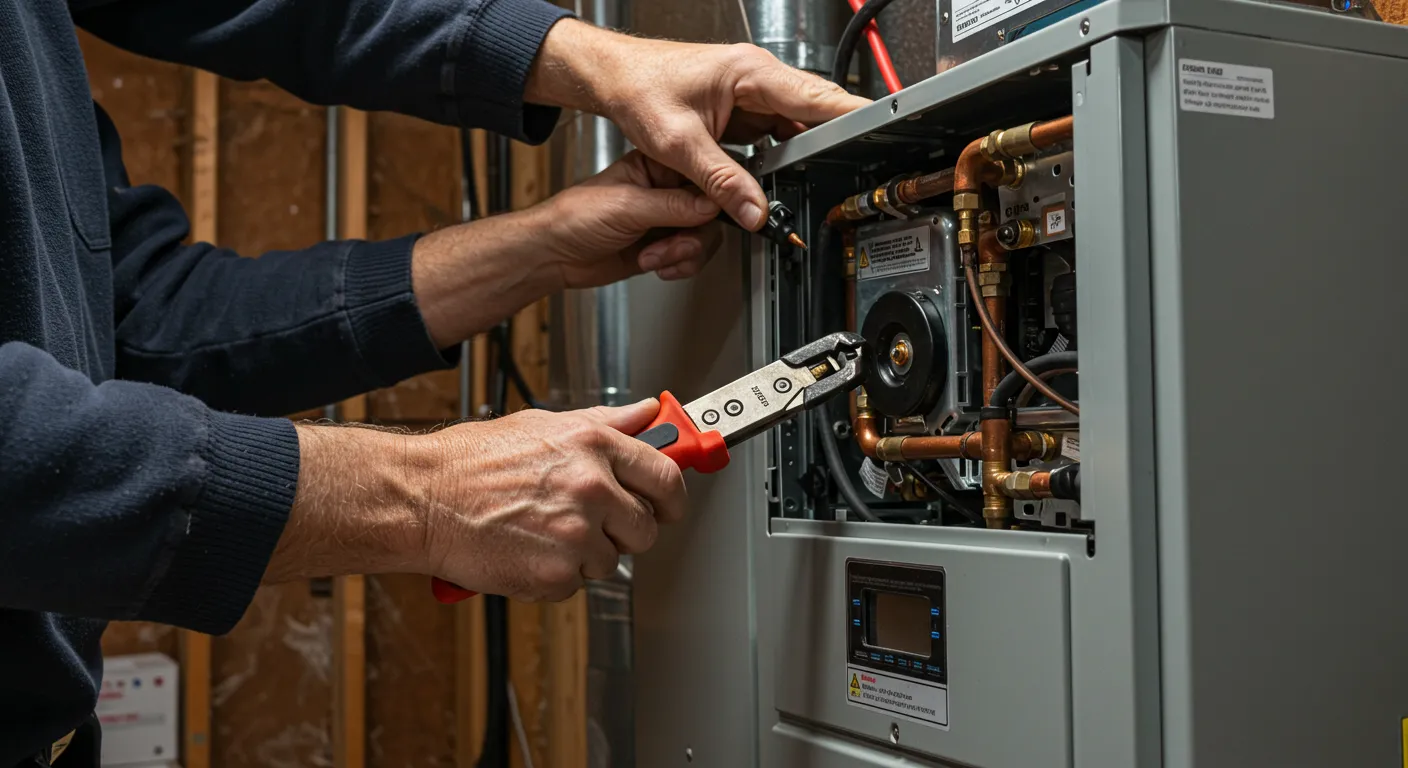
- The technician opens the furnace or air handler cabinet to test internal components.
- We measure voltage and amperage on motors and compressors to see if they are drawing too much power, which indicates wear.
- We examine the heat exchanger for cracks or corrosion, a critical step for preventing dangerous exhaust leaks.
Quotation and Repair Execution
- Once the issue is identified, we provide a flat-rate price for the repair. You approve the work before we proceed.
- The technician removes the faulty part and installs the high-quality replacement component.
- We clean the immediate area within the unit, removing dust or debris that contributed to the failure.
Testing and Validation
- Finally, we cycle the system through a full heating sequence to verify that the ignition is smooth, the flame is stable, and the blower distributes air correctly.
- We measure the temperature rise (the difference between air entering and leaving the furnace) to ensure it falls within manufacturer specifications.
Common Mechanical Failures We resolve
Heating systems are comprised of numerous moving parts and electrical circuits that degrade over time due to thermal stress. In the humid continental climate of this region, systems work hard during the winter months, leading to specific types of wear and tear.
Ignition Control Issues
Modern furnaces typically use hot surface ignitors or intermittent pilot lights rather than standing pilot lights. These electronic components are fragile and frequently burn out. If your furnace clicks but does not fire up, the ignitor is often the culprit. We carry replacements for most major brands to restore the flame immediately.
Airflow and Limit Switch Problems
If a furnace overheats, the high-limit switch will trip to prevent a fire, shutting the system down. This is often caused by restricted airflow due to dirty filters, blocked vents, or a failing blower motor. We diagnose whether the switch itself is faulty or if it is doing its job by reacting to a different airflow restriction.
Thermostat and Control Board Malfunctions
The control board is the brain of the heating system. If it fails to send voltage to the blower or gas valve, the system sits idle. Similarly, a thermostat with a dead battery or loose wiring can sever communication. We trace the low-voltage wiring to ensure signals are reaching the furnace correctly.
Flame Sensor Oxidation
The flame sensor is a safety device that detects if a fire is actually burning. If it gets coated in carbon or oxidation, it cannot detect the flame and will shut the gas valve off after a few seconds to prevent gas buildup. Cleaning or replacing this sensor is a common, cost-effective fix that restores system function.
Deciding When to Repair vs. Replace
One of the most difficult decisions a homeowner faces is determining whether to pour more money into an aging system or invest in a new unit. While our primary goal is to repair your existing equipment, there are mathematical and practical limits where repair becomes economically unwise. We help you evaluate the condition of your unit based on data, not sales pressure:
- The 50% Rule: If the cost of the repair approaches 50% of the value of a new system, replacement is generally the better financial option. Major failures, such as a cracked heat exchanger or a blown compressor in a heat pump, often fall into this category.
- System Age and Life Expectancy: Gas furnaces typically last 15 to 20 years, while heat pumps may last 10 to 15 years. If your unit is approaching the end of this window and requires a significant repair, the likelihood of another component failing soon is high. Mr.Freeze Heating & Cooling technicians provide honest assessments of your unit’s remaining lifespan.
- Efficiency and Utility Costs: Older units often operate at 60% to 70% AFUE (Annual Fuel Utilization Efficiency), meaning 30% to 40% of the energy you pay for is wasted. Modern systems operate at 95% efficiency or higher. If your heating bills in Cedar Lake are rising despite moderate usage, the operational savings of a new unit might offset the upfront cost over time.
- Comfort and Reliability: If your home has hot and cold spots, or if you have called for repairs multiple times in the last two years, the system is likely losing capacity. A reliable heating system should provide consistent, even heat without frequent breakdowns.
Regional Heating Considerations
Operating a heating system in Northwest Indiana requires specific attention to local environmental factors. The climate here features distinct four seasons, but the winters can be particularly harsh, with temperatures frequently dropping well below freezing. This puts immense strain on heating equipment, requiring it to run for long cycles.
Insulation and Ductwork
In many local homes, particularly older constructions, heat loss through poor insulation or leaky ductwork significantly impacts heater performance. A heater may be working perfectly mechanically but still fail to warm the house if the warm air escapes into the attic or crawlspace. We check for these external factors during our visit.
Humidity Control
Winter air is naturally dry, and running a furnace exacerbates this, potentially leading to dry skin, static electricity, and wood damage in the home. Conversely, high-efficiency systems can sometimes produce significant condensation that must be drained properly to prevent water damage or freezing in discharge lines. We ensure condensate lines are clear and routed correctly to handle the moisture byproduct of combustion.
Safety Codes and Venting
Local building codes dictate how furnaces must be vented, especially for high-efficiency units that use PVC piping. Ensuring that exhaust gases are vented properly is non-negotiable for safety. We verify that flue pipes are sloped correctly and free from obstructions like bird nests or ice buildup, which are common issues in this area.
Why Technical Expertise Matters
The difference between a quick patch and a permanent solution lies in the technical expertise of the service provider. Modern heating equipment involves sophisticated electronics and precise combustion requirements. An untrained individual attempting a repair can inadvertently bypass safety switches or create carbon monoxide hazards.
We invest heavily in ongoing training for our team. This ensures they are familiar with the latest technology, including variable-speed blowers and modulating gas valves, as well as legacy systems that are still common in the area. Our technicians arrive in marked vehicles with the necessary equipment to protect your flooring and maintain a clean workspace. We treat your home with respect, wearing shoe covers and cleaning up any debris generated during the repair process.
Reliability is built on accountability. We stand behind our diagnostics. If a part is replaced, it is because it was verified as faulty, not because we were guessing. This approach saves you money and ensures that when we leave, your heat stays on.
Restoring Comfort to Your Home
When your heating system falters, you need a solution that is immediate, transparent, and effective. You do not have time to wait for parts to be ordered or for technicians who cannot identify the problem. We provide the expertise required to navigate the harsh winters in Cedar Lake, ensuring your sanctuary remains warm and safe regardless of the weather outside.
From minor electrical glitches to major component failures, we have the tools and the talent to resolve the issue today.
Do not let a cold house compromise your comfort or safety. Contact us immediately to schedule your heating repair service and restore warmth to your home.