Reliable Heating Solutions for Lansing Homes
As the winter in Lansing, IL hits its stride, a malfunctioning heating system shifts quickly from a minor annoyance to a safety hazard for your home and family. If you are facing sudden heater problems, hearing strange noises, or feeling cold air from your vents, immediate relief is just a call away. Contact us now to schedule a diagnostic visit.
When your heat fails, you do not have time for vague answers or long waiting periods. You need a solution that restores warmth effectively and adheres to safety standards. Mr.Freeze Heating & Cooling provides the technical expertise required to handle complex heating failures during the coldest months of the year.
- Rapid response teams are available to assess and restore your comfort efficiently.
- Transparent pricing structures and no hidden fees, ensuring you know exactly what to expect before work begins.
- Professional installation and repairs performed by certified technicians on all major makes and models.
All services are backed by a comprehensive warranty and competitive financing options to ensure your home remains safe without breaking your budget.
Comprehensive Heating Services: What to Expect Today
When you request a service visit, the objective is to identify the root cause of the failure and implement a lasting fix. Heating systems are complex appliances involving combustion, electrical circuits, and airflow dynamics. A superficial fix often leads to a secondary breakdown later in the season. The scope of professional heating service covers the entire ecosystem of your HVAC unit to ensure efficiency and safety.
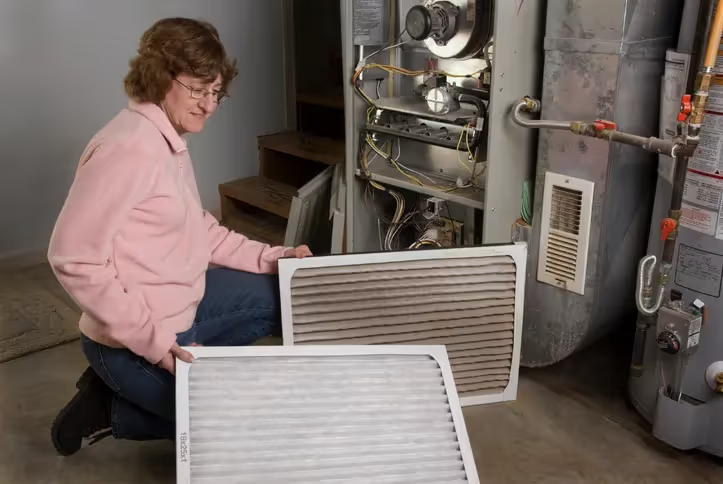
Full System Diagnostics
The service begins with a thorough diagnostic phase. Technicians utilize advanced testing equipment to measure static pressure, gas pressure, and electrical voltage. This data identifies whether the issue lies with the thermostat, the ignition sequence, or the mechanical blower motor.
- Ignition Systems: Testing the hot surface igniter or pilot light assembly to ensure the fuel engages correctly.
- Airflow Analysis: Checking the blower motor, capacitor, and belt tension to verify that warm air is being distributed effectively throughout the ductwork.
- Safety Controls: Testing limit switches and flame sensors, which are critical for shutting down the unit if unsafe conditions, such as overheating, occur.
Safety Inspection and Carbon Monoxide Testing
A critical component of any heating service in Lansing is ensuring the safe venting of combustion gases. Cracked heat exchangers are a common issue in aging furnaces and can lead to dangerous carbon monoxide leaks.
- Heat Exchanger Inspection: Technicians use cameras and visual inspection to check for cracks or corrosion in the heat exchanger cells.
- Flue Pipe Verification: Ensuring that the exhaust flue is clear of obstructions like bird nests or debris and has the proper draft to vent gases outside.
- Gas Leak Detection: Testing gas line connections near the unit for any small leaks that could pose a fire hazard.
Component Repair and Cleaning
Once the issue is diagnosed, the focus shifts to repair. This involves cleaning dirty burners that affect efficiency, replacing worn-out capacitors, or installing new circuit boards.
- Burner Assembly Cleaning: Removing soot and buildup to ensure a clean, blue flame which indicates efficient combustion.
- Sensor Calibration: Cleaning flame sensors to prevent short-cycling, where the furnace turns on and off rapidly.
- Electrical Connections: Tightening loose wires and checking the thermostat calibration to ensure the temperature reading matches the actual room temperature.
How the Repair and Installation Process Works
Understanding the sequence of events during a service call eliminates uncertainty. Professional heating service follows a strict protocol to ensure quality control and minimize disruption to your household.
- Dispatch and Arrival: The process begins when a technician is dispatched to your location. You receive a notification regarding the arrival window. Upon arrival, the technician respects your property by using shoe covers and laying down drop cloths in the work area.
- Initial Assessment and Quotation: Before any tool touches the equipment for a repair, the technician performs the diagnostic tests. Findings are presented to you with a clear explanation of what failed and why. You receive a written quote detailing the cost of parts and labor. No work proceeds without your specific approval.
- Execution of Repairs: If you approve the repair, the technician proceeds immediately using stocked parts from the service vehicle. For complex replacements, parts may be sourced same-day from local distributors. The repair is conducted according to manufacturer specifications to preserve any existing equipment warranties.
- System Testing and Verification: After the repair is complete, the system is not just turned on; it is stress-tested. The technician forces the system to cycle through multiple heating stages. They measure the temperature rise (the difference between the air entering and leaving the furnace) to ensure it falls within the manufacturer’s recommended range.
- Clean Up and Documentation: The work area is cleaned, and all old parts are removed. You receive a digital invoice and a report of the services performed, which serves as proof of maintenance for warranty purposes.
When Replacement Beats Repair: A Decision Guide
One of the most difficult decisions homeowners face is determining when to stop repairing an old unit and invest in a replacement. While repairs are often cheaper upfront, an aging system with diminishing efficiency can cost more in the long run.
The 50% Investment Rule
A general guideline used in the industry is the 50% rule. If the cost of the repair approaches 50% of the cost of a new system, replacement is usually the financially sounder choice. Putting significant money into a depreciating asset that may fail again soon is rarely advisable.
Age of the Equipment
Heating systems typically have a lifespan of 15 to 20 years. If your furnace or boiler is approaching this age range, parts may be obsolete or expensive to source. Even if a repair is possible, the metal fatigue in the heat exchanger places the unit at higher risk of catastrophic failure.
- Under 10 Years: Repair is usually the best option unless the warranty is voided or the unit was sized incorrectly.
- 10 to 15 Years: Evaluate the repair cost carefully. If the unit has a history of breakdowns, replacement offers better reliability.
- Over 15 Years: Replacement is strongly recommended to gain the benefits of modern efficiency standards.
Frequency of Breakdowns
If you are calling for service multiple times in a single winter, the system has become unreliable. The cumulative cost of service calls, parts, and the inconvenience of downtime outweighs the price of a new installation.
Energy Efficiency Drops
Older furnaces may operate at 60% to 70% AFUE (Annual Fuel Utilization Efficiency). This means 30 to 40 cents of every dollar you spend on gas is wasted. Modern units operate at 90% to 98% efficiency. Upgrading can significantly lower monthly utility bills, offsetting the installation cost over time.
Local Notes: Heating in Lansing, IL
Providing heating services in Lansing requires specific knowledge of local climate patterns, building codes, and utility infrastructure. A generic approach does not account for the specific demands placed on HVAC systems in this region.
Battling the Humid Continental Climate
Lansing experiences a humid continental climate, characterized by freezing winters and significant snowfall. The heating season is long, often requiring furnaces to run from October through April.
- Load Calculations: Systems must be sized correctly to handle sub-zero cold snaps without short-cycling during milder shoulder seasons.
- Humidity Control: Winter air in Illinois is notoriously dry. Heating service often includes maintaining or installing whole-home humidifiers to protect wood flooring and improve respiratory comfort.
Permits and Building Codes
Any significant alteration to your heating system, particularly a full replacement, requires adherence to the Village of Lansing building codes.
- Permit Requirements: The Village usually requires permits for furnace replacements to ensure the installation meets safety standards regarding gas piping and electrical grounding.
- Inspection: After installation, a municipal inspection may be required. Mr.Freeze Heating & Cooling ensures all work is up to code and coordinates necessary inspections to keep your home compliant.
Utility Provider Integration
Most heating systems in the area rely on natural gas. Service technicians must be familiar with the pressure requirements and metering infrastructure provided by local utilities like Nicor Gas. Proper calibration of the gas valve ensures the furnace burns fuel at the rate the utility supplies, preventing soot buildup and inefficiency.
Proof of Reliability and Differentiators
Choosing a service provider involves looking for indicators of professionalism and technical capability. Your heating system is the heart of your home during winter, and it requires skilled hands.
- Licensed and Insured: Every technician operating on your property is fully licensed and insured. This protects you from liability in the event of an accident and ensures the work meets state regulatory standards.
- Continuous Training: HVAC technology evolves rapidly. Technicians undergo regular training on the latest variable-speed motors, smart thermostats, and high-efficiency heat exchangers.
- Well-Stocked Fleet: Service vehicles are mobile warehouses stocked with common parts. This logistical preparation reduces the need for follow-up visits and gets your heat back on faster.
- Written Guarantees: Workmanship is backed by written warranties. If a repair fails within the warranty period, it is corrected at no additional cost to you.
When the temperature drops and your system falters, you need a partner who prioritizes your safety and comfort. Choosing a service provider is about more than just swapping parts; it is about ensuring your home remains a warm sanctuary against the harsh Illinois winter.
Dependable Heating Solutions When You Need Them Most
A failing furnace is more than an inconvenience—it is a threat to comfort and safety during harsh Illinois winters. With rapid response, thorough diagnostics, and proven repair strategies, Mr.Freeze Heating & Cooling delivers reliable heating solutions tailored to Lansing’s climate and building requirements. Whether you need emergency repair, system replacement guidance, or preventative service, our team is committed to restoring warmth quickly and correctly.
Secure your comfort and safety today. Contact us to schedule your heating service or emergency repair.