
Is Your Outdated Heater Failing When You Need It Most?
Facing the harsh Lansing winters without a reliable heating system can be uncomfortable, risky, and expensive due to inefficient energy consumption. Mr. Freeze Heating & Cooling offers rapid and reliable heating installation to ensure your home stays warm when the temperatures drop below freezing. Contact us today to schedule your assessment or discuss flexible financing options.
When your furnace or heat pump stops working effectively, you need a solution that goes beyond a temporary patch. A full replacement provides long-term security against the elements. We prioritize getting your heat back up and running with minimal disruption to your daily life.
- Ensure your comfort with same-day heating installation services designed to restore warmth immediately.
- Benefit from energy-efficient heating systems that drastically reduce monthly utility bills and save money long-term.
- Enjoy peace of mind with our comprehensive warranties and expert support that cover both equipment and labor.
Fully licensed and insured, we provide attractive financing options to make your upgrade accessible immediately.
What to Expect From a Professional Heating Installation
Installing a new heating system is a significant investment in your property’s infrastructure. It is not merely swapping one box for another; it requires a comprehensive approach to ensure the new unit interacts correctly with your home's ventilation, electrical, and gas systems. When you invest in a modern heating installation in Lansing, you are purchasing a calibrated system designed to handle the specific load requirements of your home.
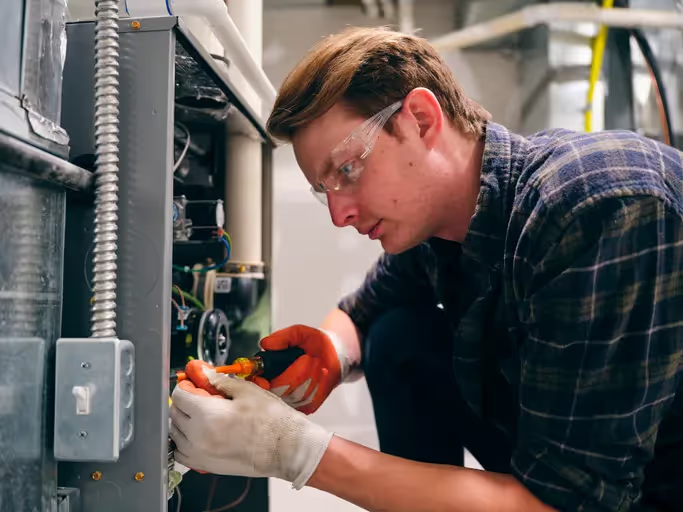
Modern equipment operates differently than units manufactured ten or fifteen years ago. High-efficiency furnaces, for example, often require specific venting changes to handle condensation and exhaust safely. A professional installation includes a complete evaluation of the existing ductwork to ensure it can handle the airflow of the new unit without causing back-pressure or leaks.
Here is what is included in a standard installation project:
- Site Preparation and Protection: Technicians prepare the area to prevent damage to flooring and surroundings. This includes laying down protective coverings and ensuring a clear path for equipment transport.
- Safe Removal and Disposal: The existing unit is disconnected from gas and electrical lines according to safety codes. The old equipment is removed and disposed of in an environmentally responsible manner.
- System Sizing and Selection: Before a single tool is lifted, a load calculation is performed to ensure the unit is the exact size needed. An oversized unit will short-cycle and wear out, while an undersized unit will run constantly without warming the space.
- Ductwork and Airflow Analysis: The connection points to the plenum and return air drops are inspected. Adjustments are made to ensure an airtight seal, which is crucial for maintaining the system’s AFUE (Annual Fuel Utilization Efficiency) rating.
- Thermostat and Control Integration: New systems often require updated thermostats or zoning controls to communicate effectively. This integration is handled during the install to maximize feature usage.
- Final Safety Inspection: A rigorous check of gas pressure, electrical voltage, and exhaust venting is conducted to rule out carbon monoxide leaks or fire hazards.
How the Installation Process Works
A structured installation process ensures that nothing is overlooked. Efficiency and safety are the primary goals, and adhering to a strict protocol guarantees that the system performs according to the manufacturer's specifications. Homeowners in Lansing can expect a streamlined workflow that prioritizes technical accuracy.
- Initial Assessment and Load Calculation: The process begins with a Manual J load calculation. This engineering formula considers the square footage, insulation levels, window types, and local climate data to determine the precise British Thermal Unit (BTU) output required. This step eliminates the guesswork often associated with simply replacing a unit with one of the same size.
- System Selection and Quote: Based on the load calculation, you receive recommendations for systems that fit your budget and efficiency goals. Options typically range from standard 80% AFUE units to high-efficiency models exceeding 95% AFUE. The quote outlines the full scope of work, including any necessary modifications to gas lines or electrical panels.
- Removal of Existing Equipment: Technicians shut off all utility connections to the furnace. The old unit is dismantled. If the existing plenum or transition ductwork is rusted or damaged, it is removed to make way for custom-fabricated sheet metal parts.
- Equipment Setting and Connection: The new furnace or heat pump is set in place. It is leveled to ensure proper drainage for condensing furnaces and smooth operation of the blower motor. Gas lines are reconnected with new sediment traps and shut-off valves if required by code. Electrical wiring is updated to meet current amperage requirements.
- Venting and Drainage Configuration: For high-efficiency units, PVC venting is installed to route exhaust gases safely outdoors. Condensate drain lines are routed to a floor drain or condensate pump to manage moisture produced during the combustion process.
- System Startup and Commissioning: Once connected, the system is fired up. Technicians measure static pressure, temperature rise, and gas flow. This "commissioning" phase is critical; simply turning it on is not enough. The system must be tuned to burn fuel efficiently and circulate air at the correct velocity.
Knowing When to Replace vs. Repair
Deciding between another repair bill and a full system replacement is a common dilemma. While repairs can extend the life of a unit, there is a mathematical and practical tipping point where replacement becomes the more economical choice. Continuing to patch a failing system often costs more in energy waste and emergency service calls than the monthly cost of a financed new installation.
Consider replacement if the following conditions apply:
- The 50% Rule: If the cost of the repair approaches 50% of the value of a new system, replacement is generally the smarter financial move.
- Age of the Unit: Furnaces typically last 15 to 20 years. If your unit is over 15 years old and requires a significant repair, parts availability will decrease while the likelihood of another breakdown increases.
- Rising Energy Bills: As components wear out, the system must work harder to produce the same amount of heat. If your utility bills in Lansing have spiked without a change in usage, the system has lost efficiency.
- Cracked Heat Exchanger: This is a non-negotiable safety issue. A crack in the heat exchanger can leak carbon monoxide into the home. In almost every scenario, a cracked heat exchanger warrants an immediate full replacement.
- Uneven Heating: If some rooms are freezing while others are hot, or if the system runs constantly to maintain temperature, the unit may have been improperly sized originally or the blower motor is failing.
- Frequent Repairs: If you have required service more than twice in the last two years, the unit is becoming unreliable. The cumulative cost of service calls adds up quickly.
Local Considerations for Heating in This Region
Operating a heating system in Illinois requires attention to regional factors that do not apply in milder climates. The extreme cold snaps experienced here put immense strain on heating equipment. A system installed in this region must be robust enough to handle sub-zero temperatures for extended periods without faltering.
- Insulation and Envelope Tightness: Local housing stock varies from historic homes with drafty windows to modern, sealed constructions. The heating installation must account for the specific heat loss profile of the building. In older homes, a more powerful blower may be necessary to push air through restrictive ductwork systems.
- Permitting and Code Compliance: Installations must adhere to local building codes. This often involves obtaining a permit before work begins and having a municipal inspector review the job upon completion. This process ensures that gas piping, electrical connections, and exhaust venting meet safety standards mandated by the city. Professional installers handle this paperwork on your behalf.
- Humidity Control: Winter air in this region is notoriously dry. A heating installation is the ideal time to consider integrating a whole-home humidifier. Dry air can cause wood floors to crack, increase static electricity, and aggravate respiratory issues. Integrating humidity control directly into the new furnace system is more efficient than using portable units.
- Venting Requirements for Snow: High-efficiency furnaces vent through the side of the house rather than the roof. In areas with heavy snowfall, these vents must be installed high enough above the grade to prevent blockage from snowdrifts. Blocked vents will cause the system to shut down automatically as a safety precaution, leaving the home without heat during a blizzard.
Why Technical Expertise Matters for Reliability
The longevity of a heating system is determined more by the quality of the installation than the brand of the equipment. Even the most expensive, top-tier furnace will fail prematurely if the ductwork is not sized correctly or the gas pressure is calibrated poorly. Technical expertise ensures that the manufacturer’s warranty remains valid and that the unit operates at its rated efficiency.
Mr. Freeze Heating & Cooling focuses on the science of heating. Correct installation involves managing airflow dynamics, combustion analysis, and electrical safety.
- Combustion Safety: Improperly adjusted burners can produce excessive soot and carbon monoxide. Professional tools are used to measure oxygen and carbon dioxide levels in the flue gas to ensure a clean, safe burn.
- Static Pressure Balancing: If the air pressure inside the ducts is too high, the blower motor will overheat and fail. Technicians measure this pressure and adjust fan speeds or modify duct transitions to relieve stress on the component.
- Warranty Registration: Most manufacturers require proof of professional installation to honor parts warranties. Certified installers ensure that the unit is registered and that all installation protocols are documented, protecting your investment for the next decade.
Upgrading your heating system is a decisive step toward securing your home against the cold and controlling your energy costs. A professional installation transforms a mechanical purchase into a long-term comfort solution. If your current system is showing signs of failure or inefficiency, do not wait for a complete breakdown in the middle of winter.
Secure Reliable Warmth for the Seasons Ahead
Upgrading your heating system is a decisive step toward protecting your home against harsh winter conditions while gaining better control over long-term energy costs. A professional installation turns new equipment into a dependable comfort solution designed for Illinois weather demands. If your current system is showing signs of failure or inefficiency, waiting for a breakdown can put your family at risk during the coldest days of the year.
Contact us today to schedule your heating installation and ensure your home remains warm and safe all season long.