
Eliminate High Indoor Temperatures With Reliable Air Conditioning Installation
Facing unexpected heat and humidity in Calumet City can turn your home from a sanctuary into a sauna within hours. Get your new AC installed quickly and efficiently with our certified technicians, who are available to restore your comfort immediately. Call us to schedule an estimate or apply for financing to get your system running today:
- Restore comfortable indoor temperatures immediately with our efficient installation services.
- Secure your investment with comprehensive warranties and ongoing support for years of trouble-free operation.
- Access flexible financing options that allow you to upgrade your system without straining your monthly budget.
All installations strictly adhere to local building codes and manufacturer specifications, ensuring safety and compliance from day one.
Immediate Solutions for Home Cooling Upgrades
When your cooling system fails during the peak of summer, waiting days for a replacement is not an option. The humidity in this region can damage wood furniture, encourage mold growth, and make sleep nearly impossible. A modern installation service focuses on speed without sacrificing technical precision. The goal is to transition your home from sweltering heat to controlled, crisp cooling in a single day whenever possible.
We provide a comprehensive scope of work that begins the moment a technician arrives at your property. This is not merely about swapping out a box; it involves a complete assessment of your current infrastructure to ensure the new unit performs efficiently. Homeowners in Calumet City often deal with fluctuating power bills due to aging units that run constantly but fail to cool. A new installation corrects these inefficiencies immediately.
Modern air conditioning systems are significantly larger and more complex than units manufactured a decade ago. This evolution requires specific modifications to the existing site, including leveling the ground pad, adjusting refrigerant lines, and updating electrical disconnects to meet current safety standards. By handling these requirements onsite, the installation ensures that your new system operates at its rated SEER (Seasonal Energy Efficiency Ratio) level, delivering maximum cooling power for every dollar spent on electricity.
The Technical Process of Installing Central Air
A professional installation follows a strict protocol designed to protect the longevity of the equipment and the safety of your home. This process is linear and methodical, ensuring no steps are missed:
- Site Evaluation and Sizing: Before any equipment is moved, a load calculation is performed. This is often referred to as a Manual J calculation. It takes into account the square footage, insulation levels, window orientation, and local climate data. Installing a unit that is too big causes short-cycling, where the unit turns on and off rapidly, failing to dehumidify the air. A unit that is too small will run continuously without ever reaching the set temperature. Correct sizing is the most critical step in the process.
- Removal and Disposal: The existing condenser (outdoor unit) and evaporator coil (indoor unit) must be disconnected and removed. This involves capturing existing refrigerant in accordance with EPA regulations to prevent environmental contamination. Mr.Freeze Heating & Cooling ensures that all old equipment is hauled away and disposed of properly, leaving your property clean.
- Indoor Coil and Line Set Installation: The evaporator coil is installed above the furnace or air handler. This component is responsible for absorbing heat from the indoor air. Technicians then install or clean the copper refrigerant lines that connect the indoor and outdoor units. If the existing lines are the wrong size or contaminated, they are replaced to prevent future compressor failure.
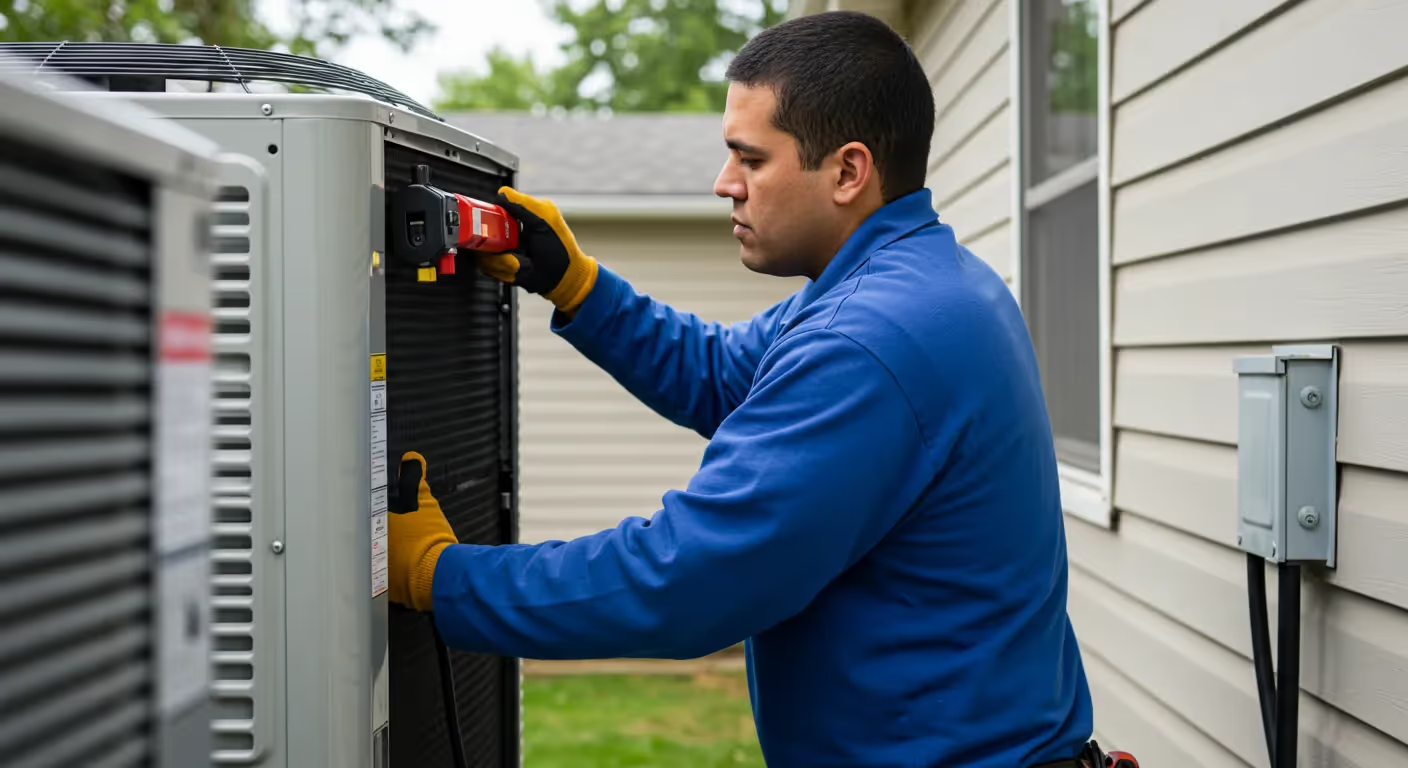
- Outdoor Condenser Setup: The outdoor unit is placed on a composite pad that absorbs vibration and keeps the unit level. Leveling is crucial for the proper lubrication of the compressor. The electrical whip and disconnect box are wired to the unit, ensuring the system has a safe and dedicated power source.
- System Commissioning and Testing: Once the mechanical connections are made, the system is braised and pressure-tested with nitrogen to check for leaks. A vacuum pump removes moisture and non-condensables from the lines. Finally, the system is charged with the precise amount of refrigerant. Technicians then measure static pressure and temperature differentials to verify the system is cooling exactly as designed.
Deciding When to Replace Versus Repair
Homeowners often struggle with the decision to repair an aging unit or invest in a new one. While repairs can seem cheaper upfront, they often act as a temporary bandage on a failing system. There are specific metrics and scenarios where replacement is the mathematically and practically superior choice:
- The 5000 Rule: Industry professionals often use the "5000 Rule" to aid decision-making. Multiply the age of your air conditioner by the estimated cost of the repair. If the total exceeds $5,000, replacement is generally the better investment. For example, if a 12-year-old unit needs a $600 repair (12 x 600 = 7,200), the money is better spent on a new system.
- Refrigerant Type: If your current system utilizes R-22 (Freon), it is obsolete. The production of R-22 has been banned, making recharging these systems exorbitantly expensive. If an R-22 unit develops a leak, it is almost always more cost-effective to upgrade to a system that uses R-410A or newer, environmentally compliant refrigerants.
- Compressor Failure: The compressor is the heart of the air conditioner. If this component fails after the warranty period has expired, the cost of the part and labor usually rivals the cost of a brand-new outdoor unit. A new unit also resets the warranty clock, providing coverage that a repair cannot offer.
- Frequency of Breakdowns: If you have required repairs in two consecutive seasons, the system is likely nearing the end of its reliable lifespan. Continued repairs become a "money pit" scenario where the cumulative cost exceeds the price of a modern, high-efficiency replacement.
Critical Considerations for Local Installations
Installing an air conditioning system involves more than just mechanical labor; it requires navigating local regulations and environmental factors specific to the region:
- Permitting and Inspections: Legitimate installations require a building permit. This process is a safeguard for the homeowner. It ensures that the electrical work and mechanical installation meet safety codes. An unpermitted installation can lead to fines, issues when selling the home, and potential safety hazards. The service provider handles the application and scheduling of inspections, removing this burden from the homeowner.
- Electrical Infrastructure: Many older homes in the area may have outdated electrical panels that cannot support modern, high-demand appliances. Part of the installation assessment includes checking the amperage capacity of your electrical panel. If an upgrade is needed to safely power the AC, this is identified before work begins to avoid tripping breakers or fire hazards.
- Humidity Control: The climate here is characterized by high summer humidity. Standard air conditioners cool the air, but they also dehumidify. However, if a system is not calibrated correctly for the specific latent heat load of the area, the house may feel cool but "clammy." High-efficiency two-stage or variable-speed systems are often recommended locally because they can run at lower speeds for longer periods, extracting more moisture from the air than single-stage units.
- Ductwork Integrity: The performance of a new AC is dependent on the ductwork it pushes air through. In many local homes, ductwork may be old, leaky, or uninsulated. Leaky ducts can result in a loss of up to 30% of cooling energy. An installation team assesses accessible ductwork to ensure that the cold air you are paying for actually reaches the living spaces, rather than escaping into an attic or crawlspace.
Differentiators in Professional Service
Choosing the right contractor is as important as choosing the brand of the equipment. The hardware is only as good as the installation quality. Poor installation techniques can reduce a unit's efficiency by up to 30% and significantly shorten its lifespan:
- Certified Expertise: Technicians undergo rigorous training to stay updated on the latest HVAC technologies, including inverter-driven compressors and smart thermostat integration. This expertise ensures that complex systems are installed correctly the first time, preventing callback service calls.
- Protection of Property: Installation involves moving heavy equipment and traversing your home. Professional crews use drop cloths and shoe covers to protect flooring. The workspace is cleaned thoroughly after the job is done, leaving the home in the same condition it was found, minus the heat.
- Safety Protocols: Dealing with high-voltage electricity and high-pressure refrigerant requires strict safety adherence. Protocols are in place to protect both the technicians and the home's occupants during the installation process. This includes verifying all gas line clearances and electrical grounds.
- Post-Installation Support: The relationship does not end once the unit turns on. Homeowners receive a complete walkthrough of the new system, including how to operate the thermostat, how to change filters, and what maintenance is required to keep the warranty valid.
Energy Efficiency and Long-Term Savings
Upgrading to a new air conditioning system is one of the most impactful ways to reduce household energy consumption. Older units often operate at 8 to 10 SEER, whereas modern standards require a minimum of 13 or 14 SEER, with high-end units reaching upwards of 20 SEER:
- Understanding SEER Ratings: SEER measures the cooling output of an air conditioner over a typical cooling season divided by the energy it uses in Watt-Hours. A higher SEER rating equates to greater energy efficiency. Moving from a 10 SEER unit to a 16 SEER unit can reduce cooling costs significantly, often paying for the difference in equipment cost over the life of the system.
- Variable Speed Technology: Traditional systems operate at 100% capacity whenever they are on. Variable speed technology allows the system to ramp up or down based on the cooling demand. On a mild day, the system might run at 40% capacity, using far less electricity while maintaining a steady temperature. This technology eliminates the loud blasts of cold air associated with older systems and provides a more consistent comfort level.
- Smart Thermostat Integration: New installations often include or are compatible with smart thermostats. These devices learn your schedule and adjust temperatures automatically to save energy when the house is empty. They also allow for remote monitoring, so you can adjust settings from your phone if you are returning home earlier than expected.
Ensuring Comfort Through Professional Execution
The decision to install a new air conditioner affects the comfort and financial health of a household for over a decade. It requires a partner who understands the technical demands of the equipment and the specific challenges posed by the local climate. From the initial load calculation to the final pressure test, every step matters.
Prioritizing a correct installation prevents the common headaches of uneven cooling, high humidity, and unexpected breakdowns. By securing professional service, homeowners ensure that their warranty remains valid and their home remains a refuge from the summer heat.
Trust Mr.Freeze Heating & Cooling to deliver a seamless installation experience that prioritizes your time, budget, and comfort.
Upgrade your home comfort today—schedule your consultation now.